
Why Your Time Is Now
The Initiative Economy: Why 2026 Belongs to the People Who Go First

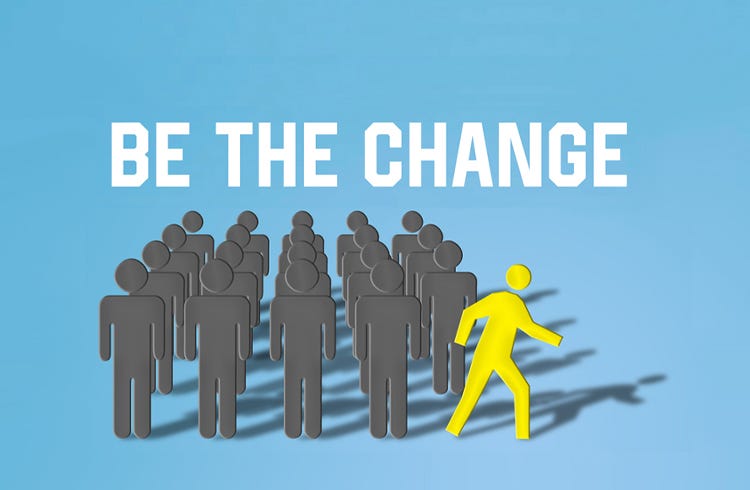
They say timing is everything.
Here’s what I’ve learned after decades in business, markets, and creative industries:
Timing doesn’t reward the person who predicts perfectly. Nobody can.
It rewards the person who moves decisively when the shift becomes obvious.
Experienced investors know they can’t time the market precisely. But they recognize when conditions are changing. When risk is mispriced. When sentiment detaches from reality.
They don’t panic.
They reposition.
In my consulting work, I’m often brought in at that same inflection point. Revenue flattens. Talent disengages. Competition feels faster. The old playbook requires more effort for less return.
Something isn’t working the way it used to.
And almost every time, resistance shows up before reinvention does.
There are always defenders of the status quo. People who benefited from the previous system. People who built identities around how things worked. People who say, “Let’s not overreact.”
But history isn’t sentimental.
In the late 1990s, the internet rewrote business. Companies like Amazon built empires. Others became case studies. Blockbuster was dominant—until it dismissed Netflix.
In 2008, structural financial weaknesses were exposed. In 2020, COVID compressed a decade of digital acceleration into months.
Each time, the ground shifted.
And there was no going back.
We are in one of those moments now. Maybe the biggest.
Artificial intelligence isn’t a shiny tool. It’s a structural acceleration in how ideas are built, work is performed, and value is created. You can debate the magnitude. You can’t debate that it’s happening.
The gap forming isn’t between smart and not smart. It isn’t technical versus non-technical. It isn’t big versus small.
It’s between those who go first and those who wait.
This is the Initiative Economy.
The Information Economy rewarded access to knowledge. AI has made information abundant, generated and modeled on demand. Information alone is no longer the edge.
The Attention Economy rewarded visibility. But attention without execution is noise, and AI is flooding the world with content.
The Creator Economy lowered the barriers to publishing. But when everyone can create, creation itself stops being the differentiator.
What separates the people pulling ahead now is simpler, and harder.
Initiative.
The independent film world offers a clear example of what happens when a system collapses.
For decades, filmmakers followed a predictable model: write the script, secure financing, shoot your film, hope for festival traction, pray for distribution. Gatekeepers decided who was seen.
Then the economics shifted.
Streaming changed revenue. DVD sales evaporated. Traditional distributors consolidated or disappeared. The old pathways narrowed.
Some filmmakers waited for the system to return.
Others complained.
Another group chose differently.
They formed the NonDē movement (short for Non-Dependent) built around a simple idea: stop waiting to be chosen by a broken system.
Collaborate. Share knowledge. Support one another. Build alternative pathways.
Instead of competing for scraps, they cooperate.
Instead of depending on outdated promises, they build leverage.
Instead of protecting ego, they share strategy.
I’m proud to be part of that movement because it represents something bigger than film.
When the system changes, you have two options:
Defend what no longer works.
Or build what comes next.
That same dynamic is unfolding across business and technology.
AI is collapsing friction. Shortening build cycles. Exposing inefficiencies that once hid behind complexity.
Some people are debating it.
Some are dismissing it.
Some are hoping it slows down.
Others are building internal tools. Automating workflows. Experimenting weekly. Reimagining how their work gets done.
They’re not waiting for permission.
They’re choosing.
Not brilliance.
Not pedigree.
Not credentials.
Initiative.
The advantage belongs to those who build before they’re forced to. Who reaches out first. Who tests before they feel ready. Who ships before it’s perfect.
AI is the accelerator, not the advantage.
Give the same tools to ten people and you won’t get equal outcomes. You’ll get amplification. The disciplined become more productive. The decisive become faster.
The hesitant hesitate at scale.
If you don’t learn, build, experiment, and initiate, someone else will define your role in this economy.
Average is quietly disappearing.
Teams are leaner. Standards are higher. Leverage per person is increasing.
The people who adapt shape their trajectory.
The people who wait are reshaped by it.
Momentum doesn’t come from being selected.
It comes from selecting yourself.
Your Move
This doesn’t require reinvention overnight.
It requires motion.
Build one internal AI tool that saves you time.
Reach out to someone you’ve been meaning to contact.
Launch something imperfect.
Audit where you’re operating at fictional speed limits.
Stop protecting comfort. Start creating leverage.
Small, decisive actions compound faster than grand plans that never launch.
Why Your Time Is Now
I’ve lived through enough cycles to recognize an inflection point.
This is not hype.
This is structural.
There are moments when the window is wide open.
This is one of them.
The question isn’t whether AI will change the world.
It already is.
The question is whether you’ll move while it does.
Whether you’ll build while others debate.
Initiate while others hesitate.
Choose while others wait to be chosen.
I’ve seen enough cycles to know this:
The people who look back with regret are rarely the ones who moved too early.
They’re the ones who waited too long.
Don’t be the one explaining why you almost started.
Start.
Your time isn’t someday.
It’s now.
Join the Business Creative Community on New View.
Initiative moves fast.
Timing moves precisely.
The inflection point is where both meet.
Insightful take on timing and decisiviness.